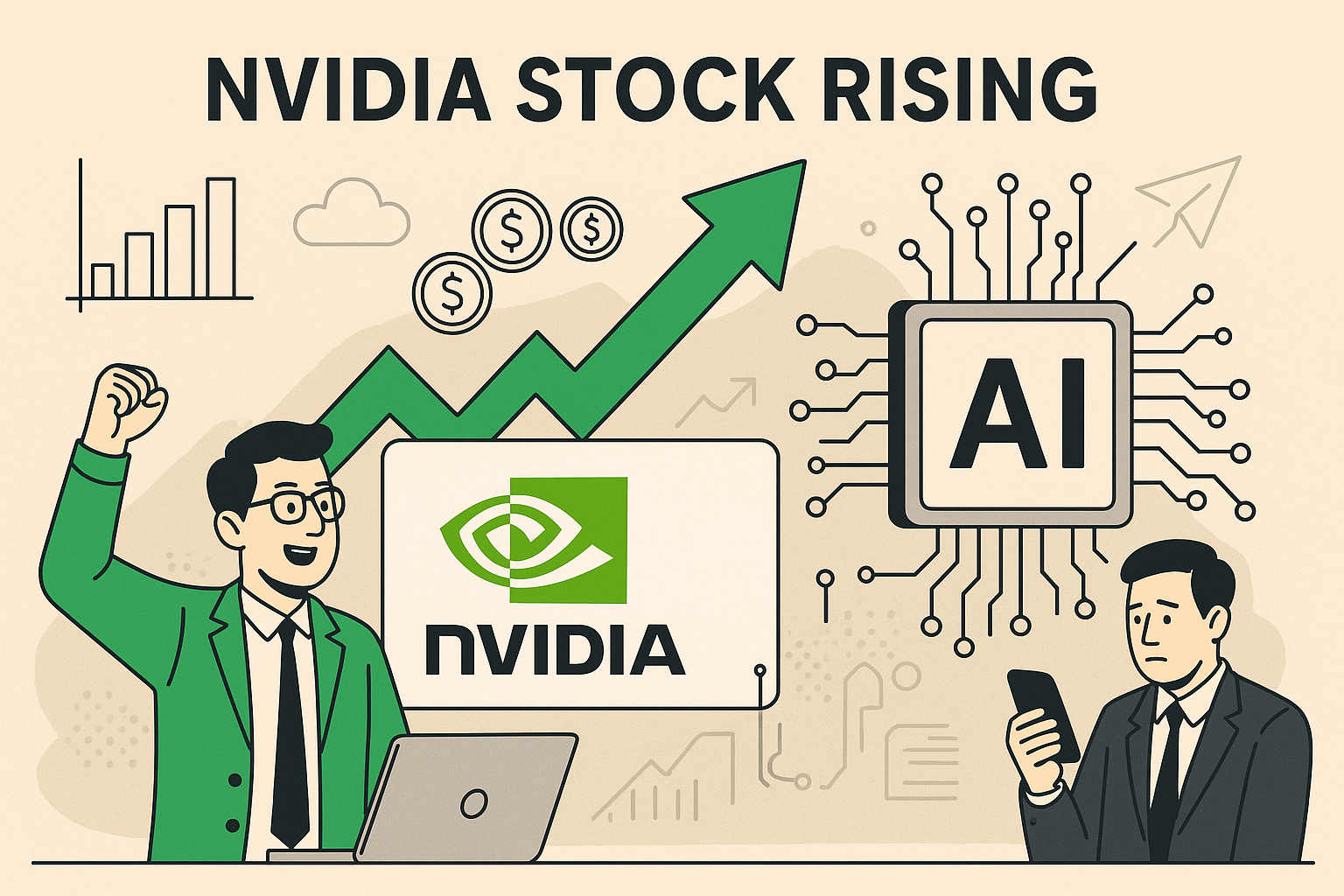
Nvidia shares moved higher early Monday even as the broader market declined, with investors responding positively to the company’s new partnership and equity investment in chip-design software maker Synopsys.
The gains helped the chipmaker counter lingering concerns about intensifying competition and rising financial commitments in the AI hardware ecosystem.
The stock rose in morning trading while the S&P 500 slipped 0.6%.
Other semiconductor names were mixed: AMD fell 0.2%, and Broadcom dropped 2.8%.
Nvidia takes 2.6% stake in Synopsys
Nvidia disclosed a $2 billion investment in Synopsys, purchasing shares at $414.79 apiece for a 2.6% stake.
Synopsys, one of the world’s largest providers of semiconductor-design software, plays a critical role in enabling the layout, verification and development of advanced chips — including those used in AI systems.
The partnership gives Nvidia deeper integration in the design pipeline.
The companies said they will bring Nvidia’s tools directly into Synopsys applications, deploy AI agents to accelerate design work and engage in joint marketing efforts.
The collaboration is intended to strengthen Nvidia’s control over its supply chain as demand for high-performance chips continues to exceed industry capacity.
The tie-up appeared to support Nvidia shares even as investors remain wary of circular investment structures.
Nvidia’s strategy of investing in companies that are also its customers has drawn scrutiny, with critics arguing the arrangements may inflate valuations or obscure the true nature of financial flows across the AI supply chain.
Analyst flags hidden risks
Seaport Research Partners analyst Jay Goldberg reiterated his Sell rating and $140 price target on Nvidia, warning that the company’s competitive and financial pressures are intensifying.
Goldberg argued that some of Nvidia’s financial arrangements are not fully reflected in reported results but are already becoming “material and likely to grow significantly next year.”
He highlighted the company’s $26 billion in cloud-compute service agreements — commitments Nvidia says support research and its DGX platform.
Seaport described those agreements as “a form of rebate” and said properly accounting for them “would take 400bps off gross margins next year, or at least $0.30.”
Goldberg also pointed to increasing competition from Google’s internally designed TPUs, which he said “can outperform Nvidia systems on many metrics,” particularly as AI workloads diversify.
Additionally, he raised concerns about Nvidia’s expanding financial commitments to customers, noting the company has spent $6 billion on private companies this year and has pledged another $17 billion, including $5 billion to Intel.
Wall Street is still divided
Not all analysts share the cautious outlook. Morgan Stanley reaffirmed its overweight rating on Nvidia and raised its price target to $250 from $235, implying 41% upside from Friday’s close.
Nvidia shares have gained 32% so far in 2025.
“We continue to see NVIDIA maintaining dominant market share, as threats are becoming overstated, though we aren’t sure exactly what will turn sentiment around,” analyst Joseph Moore wrote.
He added that customer anxiety remains high about securing a sufficient supply of Nvidia products, especially next-generation Vera Rubin systems.
The post Why Nvidia stock is bucking the general trend today appeared first on Invezz