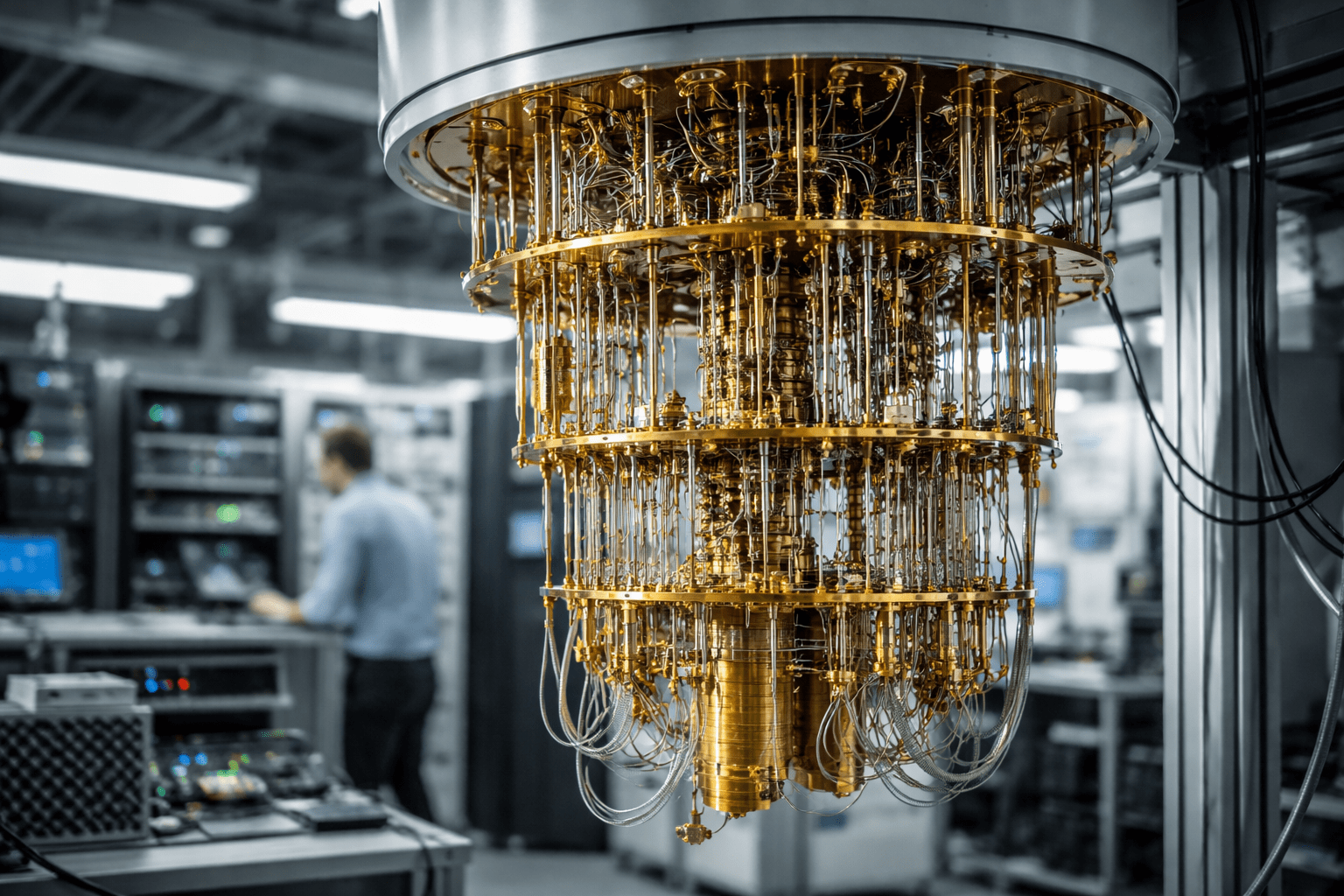
Quantum computing is quickly moving from a long-term research bet to a serious infrastructure race.
Nvidia’s venture arm backed Alice & Bob, a French startup working on less error-prone quantum hardware, just as Washington moved to pump about $2 billion into nine quantum companies.
The timing was not accidental, as the surge in investment reflects a growing realization that computing infrastructure is becoming more crucial to modern economies.
Nvidia’s quiet quantum shopping spree
Nvidia is not trying to build the world’s best quantum computer.
Its strategy is subtler, and potentially more powerful: build the layer every quantum computer will need to plug into.
Over the past year, Nvidia’s venture arm, NVentures, has put money behind a spread of quantum approaches, including QuEra, Quantinuum, PsiQuantum and now Alice & Bob.
Those companies are chasing different types of qubits, which are the fragile units that hold quantum information, but Nvidia’s bet cuts across the whole field.
At the centre of that strategy is CUDA-Q, Nvidia’s open-source platform for hybrid quantum-classical computing, where CPUs, GPUs and quantum processors work together.
Its DGX Quantum system and newer NVQLink architecture push the same idea: tomorrow’s quantum machines will still need classical supercomputers to control them, correct errors and make them usable.
Motley Fool analyst Chris Neiger put it neatly: Nvidia is laying the groundwork to become the “de facto infrastructure layer” for quantum computing, much as it became foundational to AI.
Alice & Bob appear to agree as the company said the future of quantum will be “hybrid, combining quantum and classical computing to solve real-world problems.”
Why Washington is writing a $2 billion check
The US government’s move is bigger than a tech subsidy. It is an industrial policy with a geopolitical edge.
The Commerce Department said on Thursday that it had signed nine letters of intent to provide $2 billion in incentives under the CHIPS and Science Act.
The money is meant to strengthen domestic quantum manufacturing and accelerate work on fault-tolerant quantum computers, which are machines reliable enough to solve real commercial and national-security problems.
IBM is slated to receive $1 billion to establish a quantum foundry subsidiary.
GlobalFoundries is in line for $375 million. Atom Computing, D-Wave, Infleqtion, PsiQuantum, Quantinuum and Rigetti are each set for about $100 million, while Diraq could receive up to $38 million.
Washington will receive minority, non-controlling equity stakes in each company, extending the playbook it has already used with strategic sectors such as semiconductors and rare earths.
The urgency is not hard to decode as Quantum computing could reshape drug discovery, materials science, cryptography, finance and defence.
McKinsey’s 2026 Quantum Technology Monitor calls the sector a “commercial tipping point” and projects the internal quantum market could reach $60 billion to $100 billion by 2035, with quantum computing alone accounting for $43 billion to $71 billion.
The post Why Nvidia and Washington are suddenly betting big on Quantum appeared first on Invezz